
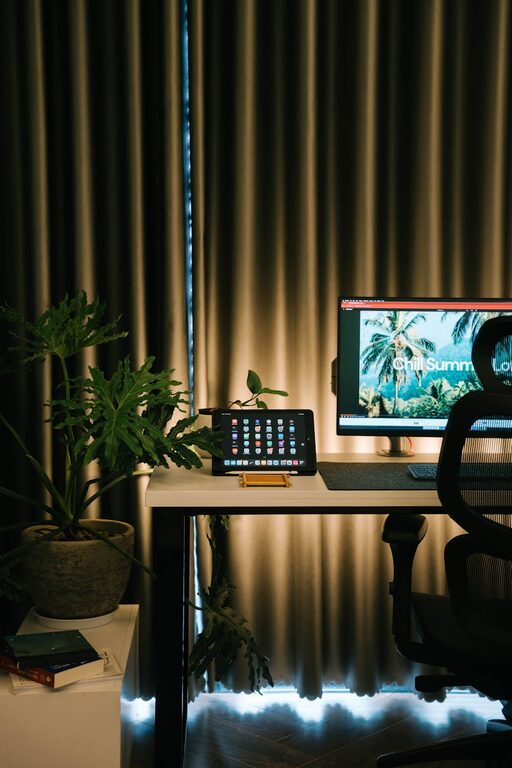
Creating a cosy and inviting home workspace is essential for staying comfortable and productive, especially when working remotely. A well-designed workspace not only supports your work needs but also promotes well-being, helping you feel motivated and focused throughout the day. Whether you have a dedicated room or just a small corner, these tips will help you create a space that feels both welcoming and functional.
1. Choose the Right Location
The first step in creating an ideal home workspace is selecting the right spot. Aim for a quiet area with minimal distractions and enough natural light.
– Find a quiet corner: Try to pick a place away from the hustle and bustle of the household.
– Prioritise natural light: Position your desk near a window if possible; proper lighting reduces eye strain and lifts your mood.
– Consider space and privacy: If you need privacy for calls or focused work, choose a spot that offers seclusion or can be easily sectioned off.
2. Invest in a Comfortable Chair
Your chair plays a big role in how comfortable you feel while working. Since you’ll be sitting for extended periods, choose one that supports good posture.
– Ergonomics matter: Look for adjustable chairs that support your back and encourage upright sitting.
– Cushion and support: A padded seat and lumbar support help prevent discomfort.
– Test before buying: If possible, try out chairs beforehand to find one that feels right.
3. Create a Functional Desk Setup
Your desk should be large enough to hold your essentials but not cluttered. A clean and organised space helps maintain focus.
– Desk size: Ensure your desk accommodates your computer, keyboard, and any necessary paperwork or tools.
– Keep supplies handy: Use desk organisers or drawers to keep stationery within easy reach.
– Cable management: Tidy cables with clips or ties to avoid a messy appearance.
4. Add Personal Touches
Personalising your workspace can make it feel more inviting and reflect your personality.
– Decorate with plants: Indoor plants brighten the room, improve air quality, and reduce stress.
– Add artwork or photos: Displaying art or photos that inspire you can create a more enjoyable environment.
– Use colour wisely: Choose calming or uplifting colours for accessories or walls, such as soft blues, greens, or warm neutrals.
5. Optimise Lighting
Good lighting is crucial for minimizing eye strain and maintaining concentration.
– Natural light: Take advantage of daylight as much as possible.
– Task lighting: Add a desk lamp with adjustable brightness for detailed work.
– Avoid glare: Position screens and lights to prevent reflections and glare.
6. Maintain Organisation
Keeping your workspace tidy contributes to a calm and productive atmosphere.
– Daily tidying: Spend a few minutes each day putting things back in place.
– Use storage solutions: Shelves, boxes, and drawers keep clutter out of sight.
– Go paperless: Whenever possible, switch to digital files to reduce paperwork.
7. Include Comfort Accessories
Small additions can greatly enhance your comfort during work hours.
– Use a footrest: Supports your legs if they don’t reach the floor comfortably.
– Add a cushion or blanket: Great for colder days, these add warmth and softness to your chair.
– Keep a water bottle nearby: Staying hydrated is important for focus and health.
8. Set Boundaries and Routines
An inviting workspace isn’t just about physical elements but also about how you use it.
– Designate work hours: Having set times helps maintain work-life balance.
– Signal availability: Use signs or other cues to let others know when you’re working.
– Take breaks: Regular breaks improve productivity and prevent burnout.
—
By combining these practical tips, you can design a home workspace that feels cosy, welcoming, and encourages you to perform at your best. Remember, the best workspace is one that suits your needs while making you look forward to working each day. Happy decorating!